|
M. Markley Antiques |
Antique Tables and Desks
| ||||||||||||||||||||||||||||||||||||||||||||||||||||
|
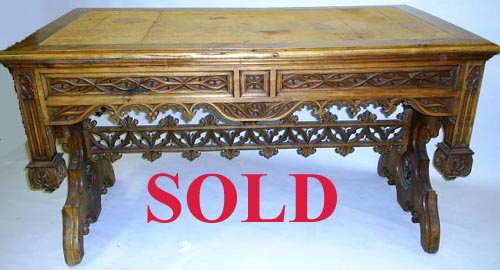
For prices, additional photos, and more information about each item, CLICK on the photo, plus check out our page of Recent Arrivals. For more information about the history of tables, scroll down below the photo gallery. |
|
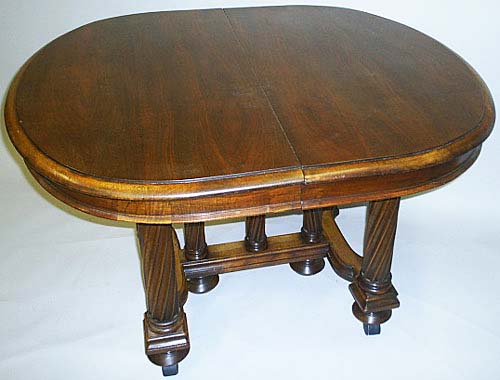
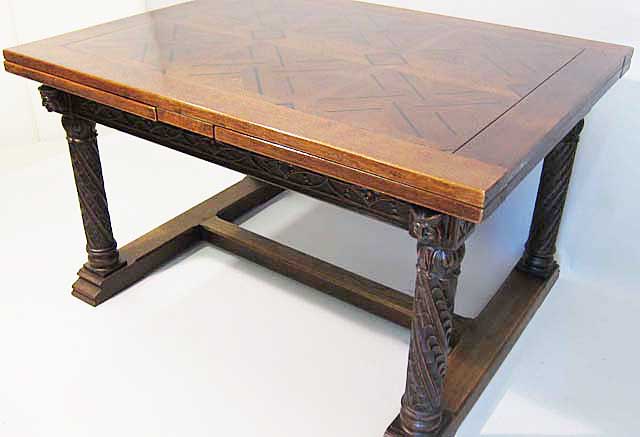
![]() #9211 - Louis XIV/Provençal Dining Table (extendable) and 6 Chairs |
|
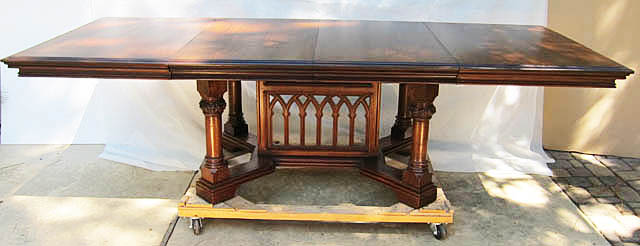
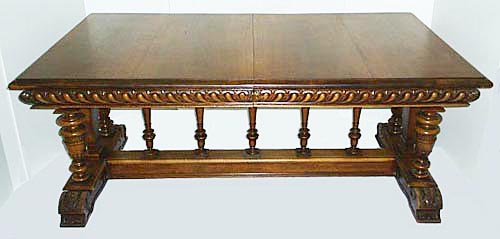
![]() #4107 - Gothic (Henri II) Dining Table in Walnut |
|
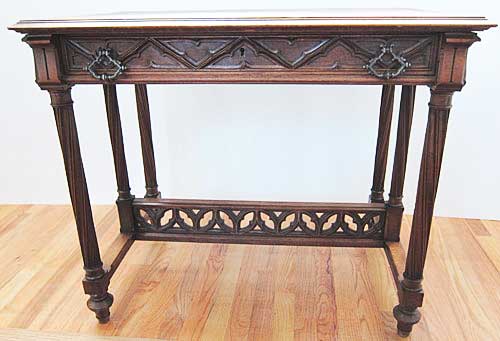
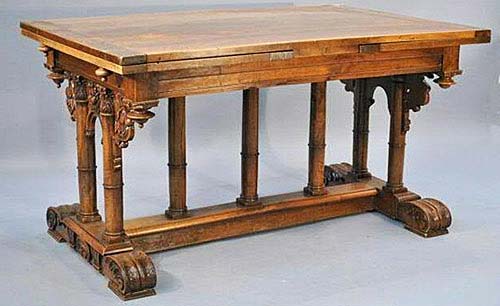
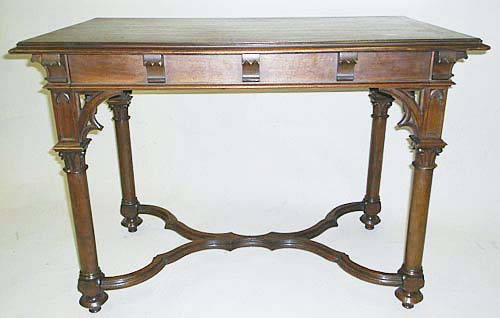
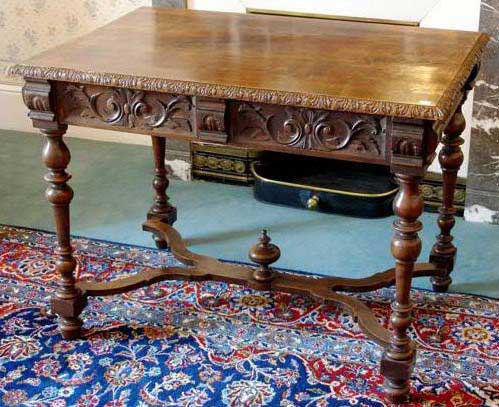
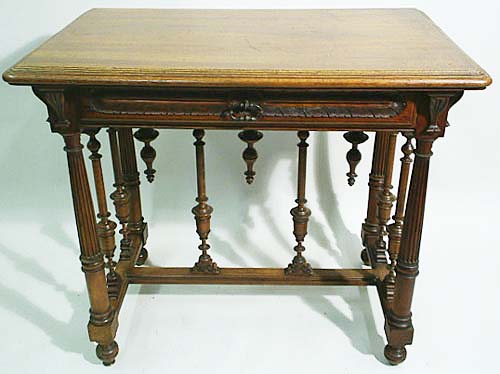
![]() #4136 - Small Gothic Table in Walnut |
|
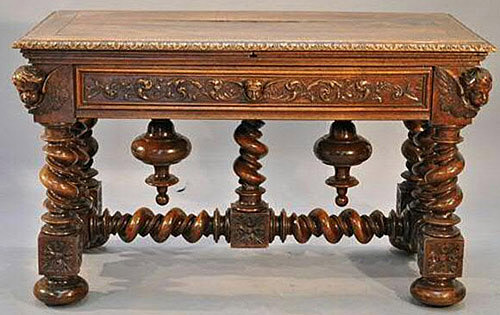
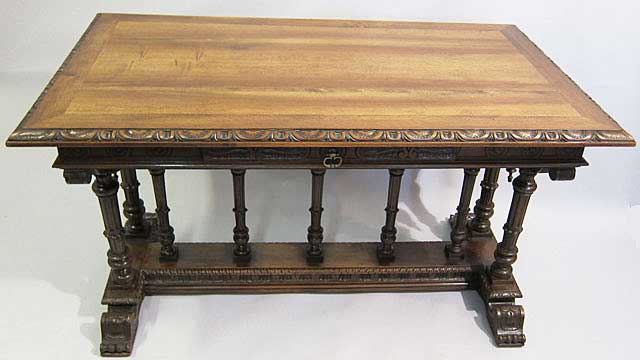
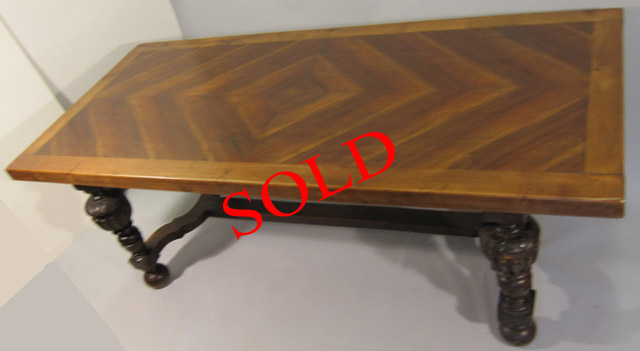
![]() #4137 - Walnut Dining Table or Executive Desk |
|
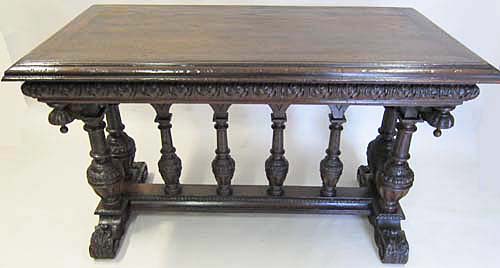
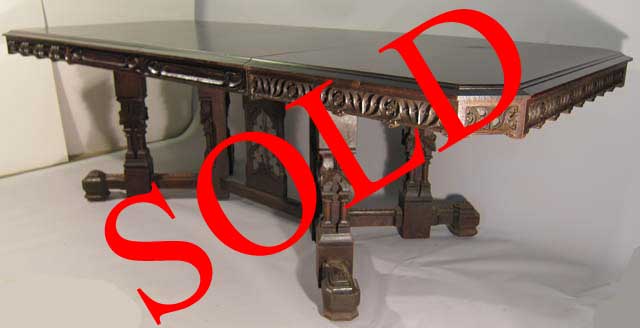
![]() #4110 - Gothic Dining Table in Walnut |
|
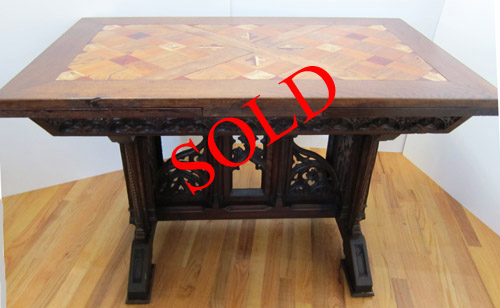
![]() #4104-Walnut Table with Inlaid Top |
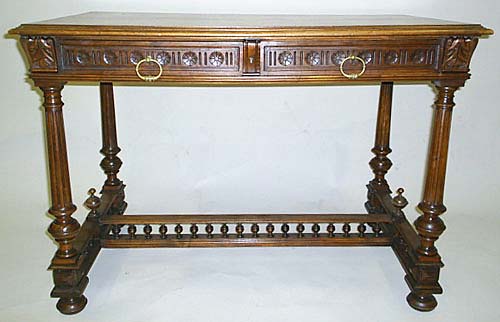
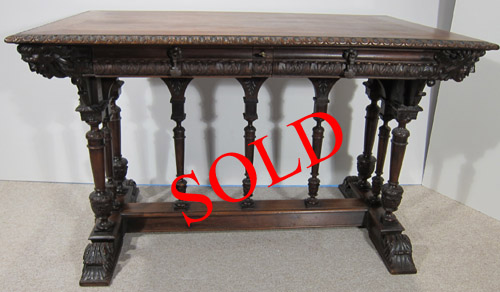
![]() #4103-Henri II Table or Desk |
![]() #4135 - Oak Dining Table with Walnut Inlay |
|
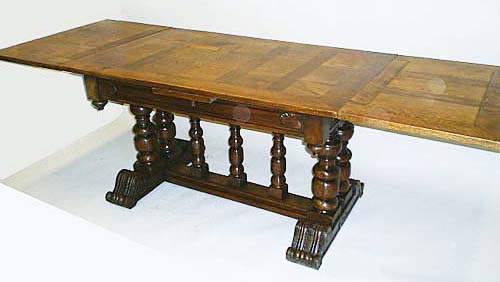
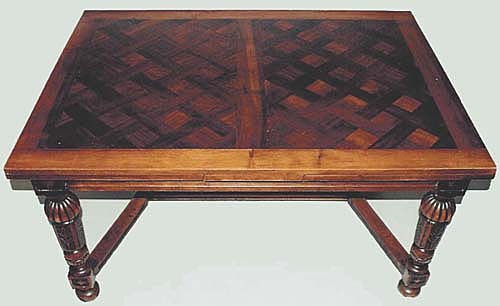
![]() #4112 - Oak Draw-Leaf Dining Table |
|
![]() #3304 - Renaissance Croix de Lorraine Table |
![]() #3303 - Renaissance Desk |
![]() #3308-Italian Renaissance Dining Table |
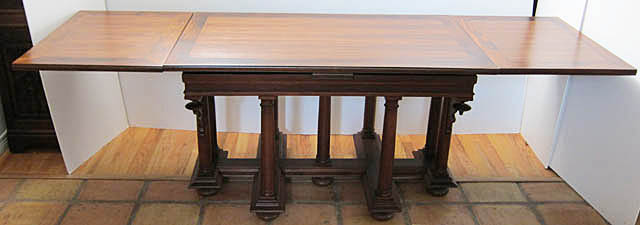
![]() #3202 Italian Renaissance Dining Table with Extensions |
![]() #9218 - Renaissance Table Desk |
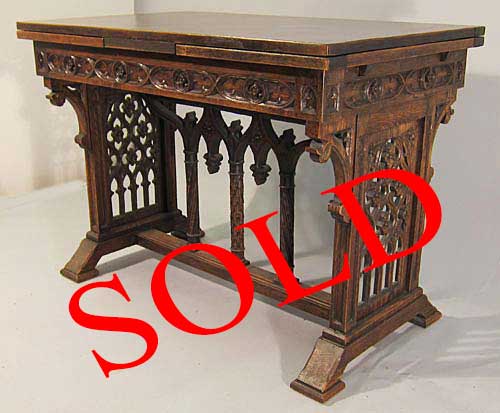
![]() #9219 - Henri II Table Desk |
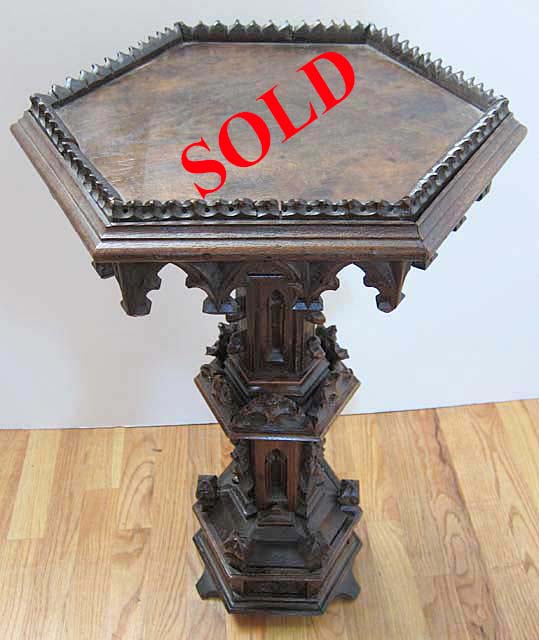
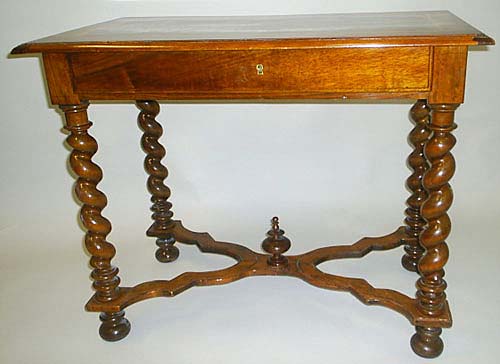
![]() #9280 - Louis XIII Table Desk
|
![]() #9310 - Louis XIII Table
|
|
|
|
|
|
|
![]() #1029 - Gothic Dining Table
|
![]() #3098 - Renaissance Desk |
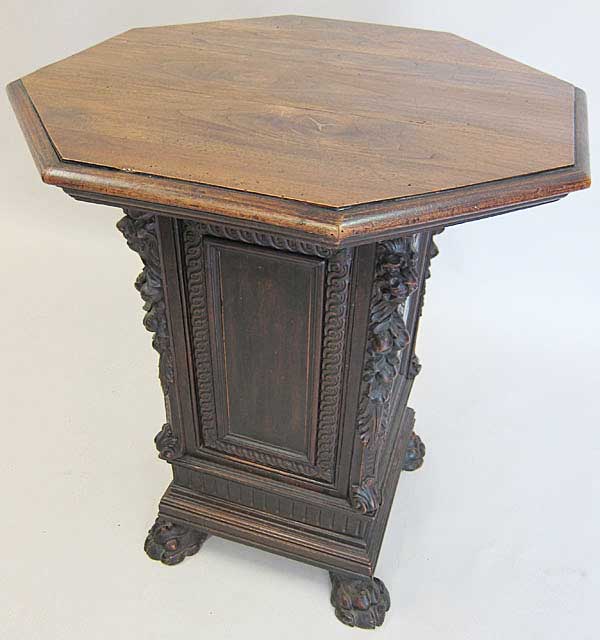
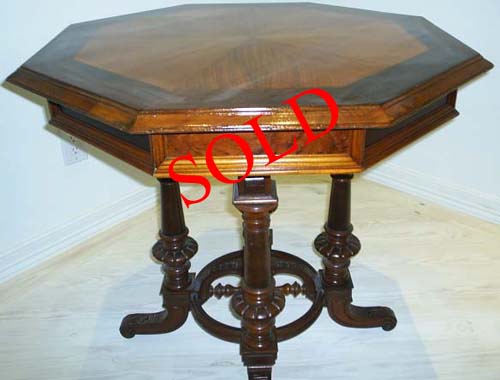
![]() #9390 - Renaissance Octagonal Table |
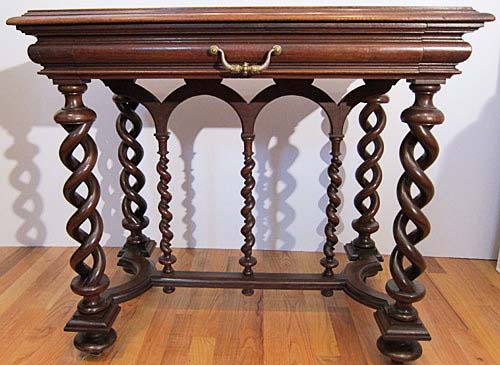
![]() #9290 - Small Louis XIII Table |
![]() #9451 - Gothic Dining Table with Extensions |
|
![]() #3086 - Reproduction Desk - Small |
|
![]() #3086 - Reproduction Desk - Large |
|
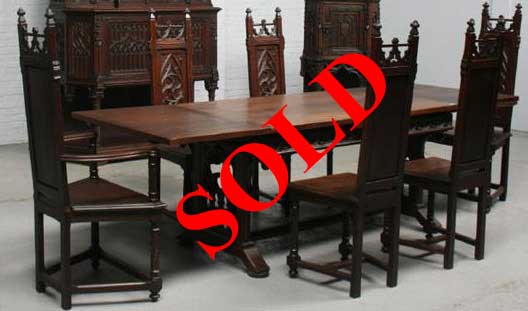
![]() #9206-Gothic Dining Table and 8 Chairs |
|
|
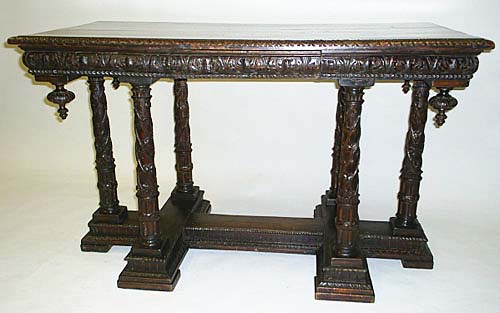
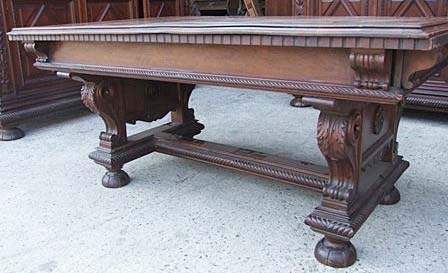
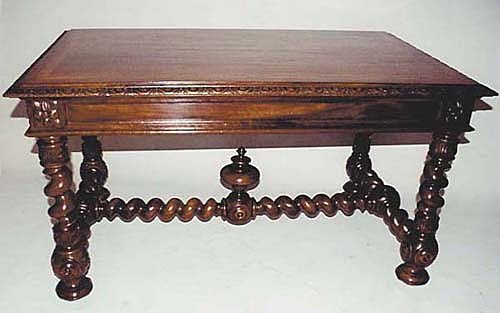
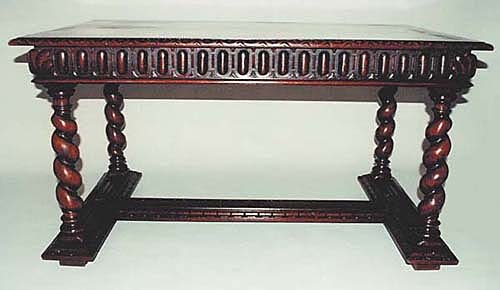
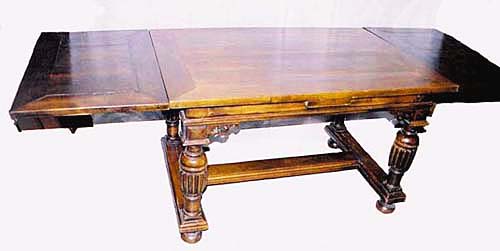
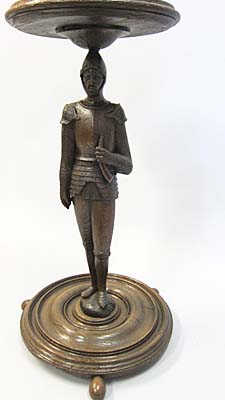
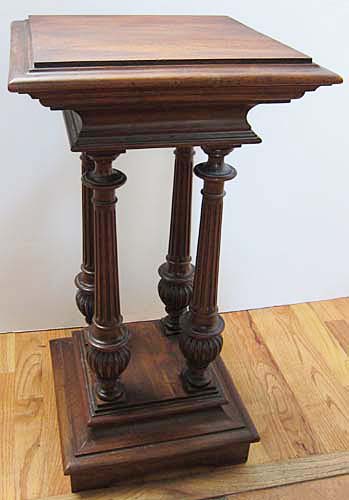
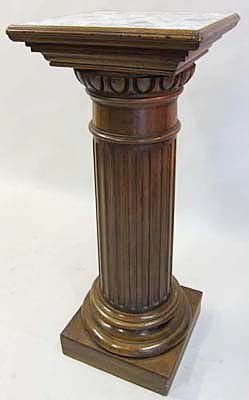
Tables were perhaps the earliest indicators that a nomadic existence was waning in Medieval Europe. Large planks on saw-horses gave way to fabricated tables with central stretchers descended from the communal tables de monastère or refectory tables used in the dining halls of monasteries. Making possible shared meals and socializing cemented the importance of the table from the dawn of European history through to our own time. Throughout the Middle Ages, the primary functions of the table were for eating and for displaying items. It was not until the Renaissance that tables began to be designed for more specific functions such as gaming and writing. As commerce played a more important role and cities grew, tables intended for a distinct commercial purpose, such as changing money or writing contracts, became more important and their design more elaborate. Drawers were introduced in the band just below the top and the bureau-plat was born. The term bureau comes from bure, a high-quality cloth draped over tables used by the keepers of the accounts at large estates and intended to distinguish it from the homespun, coarse woolen cloth used by less prestigious functionaries. By the early 17th century the term bureau had come to mean not only the reinforced cloth but also the table to which it was attached. From there, the person who sat at the table became the bureaucrat, giving rise to the institution known the world over, both collectively and pejoratively, as bureaucracy. For residential uses, tables took on various forms. Most popular in the Renaissance was the "library table," whose width was approximately half its length, supported by a trestle of connected arches over an "H" shaped stretcher. Developed in Italy and known in France as the table à l'Italienne, it was inspired by tables made from marble in ancient Rome and called a cartibulum. Designed for pride of place in a library, these tables were magnificently carved from the finest, old growth walnut. Among the most beautiful were those of Jacques Androuet du Cerceau, whose engravings of tables and other furniture designs inspired generations of craftsmen. The reign of Louis XIII saw the popularity of the writing table or bureau-plat with four legs in the form of torsades or twisted columns. Some of these tables were so large that they could fill the role of a modern dining or kitchen table. By the time of Louis XIV's long reign, tables were finding new forms such as ovals, circles and consoles, with more elaborate decoration. During the 19th century, enthusiasm for furniture of the Middle Ages and Renaissance led designers to revive the styles of dining tables popular in the earlier periods but with additional emphasis on architectural features such as Gothic arches and tracery or Renaissance columns and arches. The revival also placed great emphasis on the beauty of the wood comprising the table top. Before the 19th century when the making of textiles was industrialized and prices dropped precipitously, the table had been less important and valuable than the cloth covering it and so there was little interest in what the top looked like. Aspects of this continued into the 20th century when leaves or extensions to tables were unfinished and of lesser quality wood with the expectation that they would be covered by a cloth when in use. Other forms of tables include the guéridon, a heavily-carved circular or octagonal top mounted on a central pedestal. Its cousin, the sellette, is taller and slimmer - designed to function as a pedestal or stand for objects such as ceramics, silver, glass, or a candelabrum for illumination. It was not until modern times that such functional tables as the coffee table or end table developed and so Gothic and Renaissance examples (or even their 19th century revivals) do not exist. While we have seen 19th century copies of ancient tables "modified" by shortening their legs to become coffee tables, we cannot condone this barbaric practice.
|
|