|
M. Markley Antiques |
French Antique Chests | ||||||||||||||||||||||||||||
|
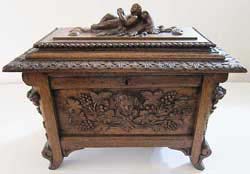
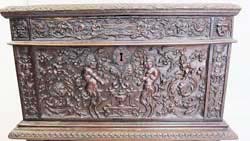
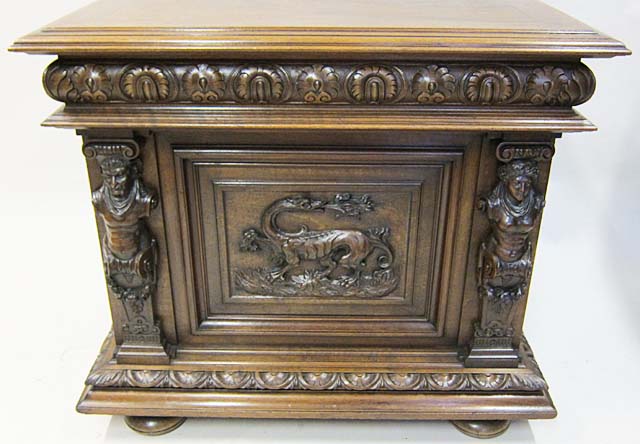
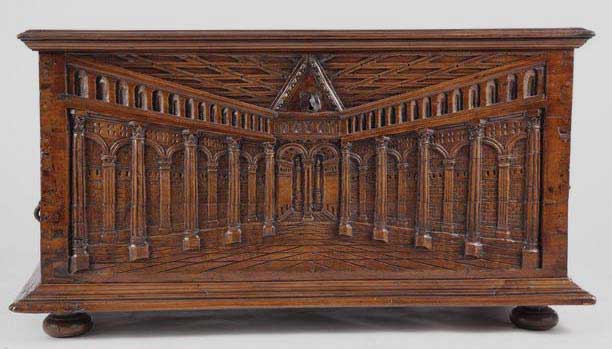
For prices, additional photos, and more information about each item, CLICK on the photo, plus check out our page of Recent Arrivals. For more information about the history of chests, scroll down below the photo gallery. |
|
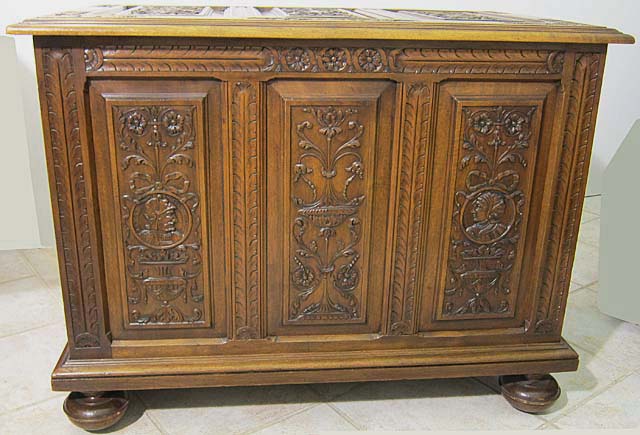
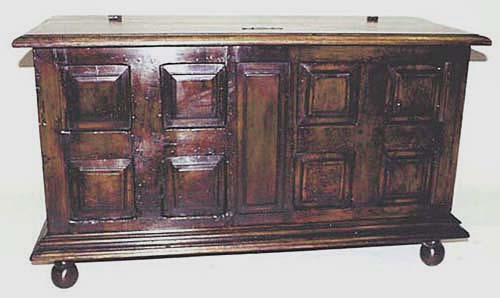
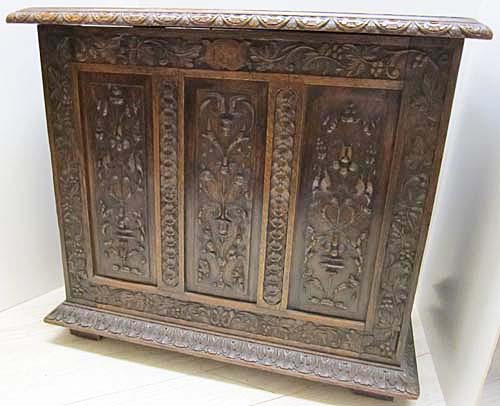
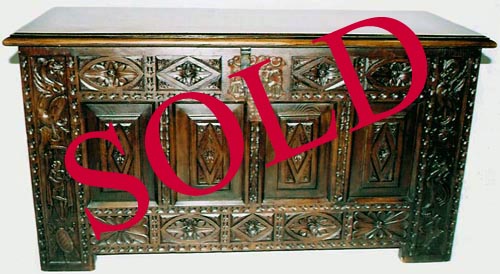
![]() #3213 Renaissance Chest |
|
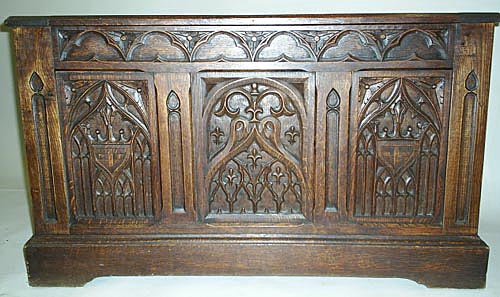
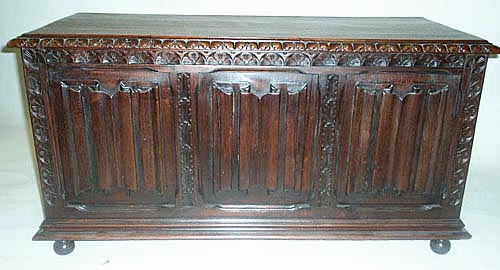
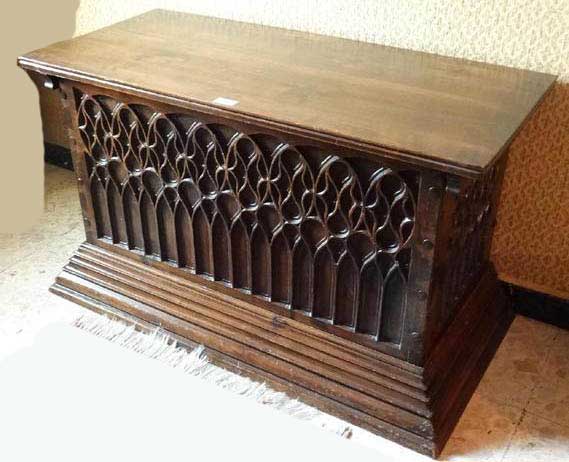
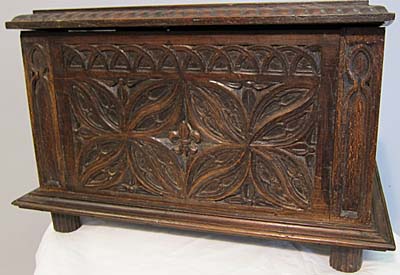
![]() #4158 - Gothic Chest |
|
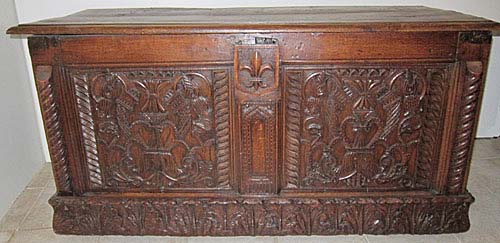
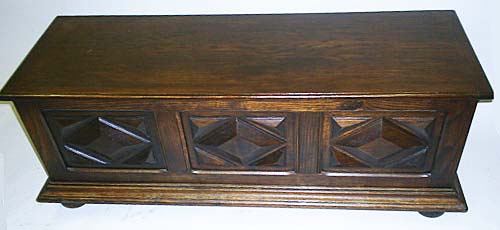
![]() #1034 - 17th Century Oak Chest |
|
![]() #9460 - Oak Coffret (Box) |
|
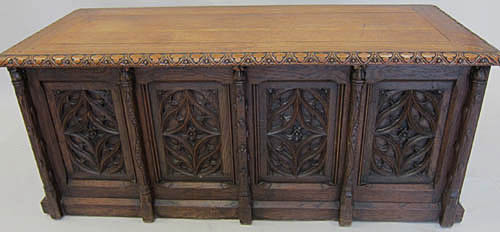
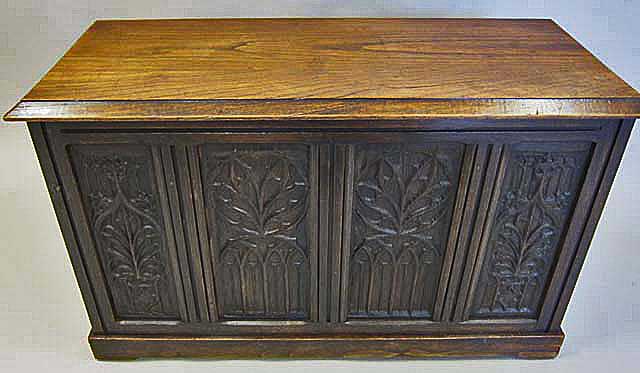
![]() #3216 Gothic Chest |
|
![]() #4152 - Louis XIII Chest |
|
![]() #3090 - Renaissance Chest |
![]() #4105 - Gothic Chest |
![]() #9260 - Breton Wedding Chest |
![]() #3089 - Henri II Chest |
![]() #3224 - Gothic/Renaissance Chest |
|
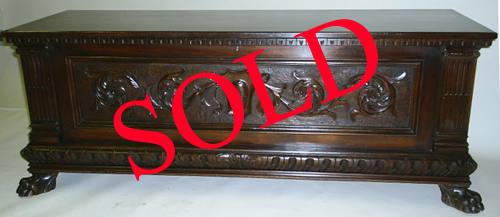
![]() #4109 - Italian Renaissance Chest |
|
![]() #4163 - Reproduction Gothic Chest |
|
|
We adore
chests or coffres because they were and remain the most versatile and adaptable
furniture ever invented. A true
"multi-tasker" for Medieval times, a chest functioned as bed (for
children or very small adults), table,
or seat while securing all manner of worldly goods under lock and key. Not only was it the main item of furniture
in early French households, it was not uncommon to have a chest in every
room. Tracing
a chest's DNA to its ultimate ancestor shows that it began life in Roman times
as a container for a soldier's weapons, often hewn from an entire log with a
portion cut open and hinged to form the top (hence, chests also referred to
as 'trunks').
Later Roman chests derived their style from the burial sarcophagus made
of marble and heavily carved. Through
the Dark Ages, the Middle Ages and into the Renaissance, the chest continued to
have a security function -- housing the owner's valuables in a relatively
portable form but strong enough to deter thieves. The French nobility led a semi-nomadic life traveling from one
castle or home to another and taking their furniture with them. The portability and versatility of chests
came in handy for transporting textiles and other valuables as well as serving
as seats, tables and other functions on arrival at each location. So many
categories of furniture owe their development, during the Middle Ages, to the
chest. For example, the armoire began
as a chest standing on its end so the lid could swing to the side as a
door. That staple of French dining
rooms, the bahut-deux-corps, began life as two chests stacked on top of one
another with their lids opening to the front.
The dressoir cabinet
evolved from a chest placed on a small table or
platform. The bench is a chest with a
back and arms added, while retaining the convenience of a storage
area below the seat. Throughout the Middle Ages and Renaissance,
chests were used to store prized culinary commodities such as salt and spices,
keeping them not only safe from thieves but protected from vermin. In a smaller form, the coffret, the chest
became a jewelry box or small yet secure container for housing highly portable
valuables. The coffret took on its own
decorative vocabulary associated with the style and wealth of its owner. During
the Gothic period in northern France, chests enjoyed their glory days -- borrowing
from cathedrals such architectural elements as intricately carved arches and tracery
(fenestrage) to become architectural masterpieces in their own right. Many of these pieces survive as faithful
copies by 19th century craftsmen seeking to evoke the grandeur and elegance of
earlier times. In the
Renaissance, the styles developed and perfected in Italy swept into Paris and
the Loire Valley with Catherine de'
Medici's entourage of craftsmen brought to the court of her husband, the future
King Henri
II of France. This decorative
vocabulary, including vegetation and mythological figures, quickly supplanted the
last remnants of Gothic style among the furniture makers of Northern France. The
coffre de mariage or wedding chest was also a popular form used by the bride to
accumulate the linens to be used in marriage - not unlike the American concept
of a "hope chest." Regional
versions of the wedding chest were particularly popular in Brittany, often
including likenesses of the bride and groom in carved panels on the front of
the chest. This versatility as well as a chest's portability helped ensure its popularity in the 19th century when French craftsmen sought to recapture the romance and chivalry of an earlier era - characteristics embodied in the chest as a cherished furnishing for the ages. |
|